
Clemson Football Embraces Transfer Portal: Departures, Commits and ACC Rebuild
CLEMSON, S.C. — As the NCAA transfer portal window opens for the 2026 cycle, Clemson University’s football program finds itself in the midst of a significant roster transition. After a disappointing season that culminated in a Pinstripe Bowl loss, the Tigers are confronting attrition, departures and the opportunity presented by the transfer portal: a dynamic marketplace of eligible NCAA players seeking new homes.
What Is the Transfer Portal — and What It Means for Players
The NCAA transfer portal, launched in 2018, is a database of student-athletes who have officially notified their school of intent to explore transferring to another institution. Once a name is in the portal, other programs can contact the player to recruit them for a new opportunity. Under current NCAA rules, the portal opens for a brief window in January — in 2026, from Jan. 2 through Jan. 16. Once in the portal, players are free to commit to a new school at any point.
For players, the portal represents both opportunity and uncertainty. It allows athletes to seek more playing time, change schemes, or pursue goals at another program without waiting for graduation or release. However, it also involves risk: players can lose scholarship guarantees or fall into crowded situations with other portal entrants vying for the same roles.
In an era where NIL (Name, Image, Likeness) considerations and early NFL entries reshape college rosters, the portal has become an essential component of roster management — for both players and coaching staffs.
Clemson’s Transfer Portal Departures
Clemson has already seen a notable wave of players enter the portal as it heads into the 2026 cycle. Among those departing or expected to enter are:
Stephiylan Green, Defensive Tackle: A three-year contributor on the interior line, Green has logged 34 tackles over his Clemson career and is drawing interest from other Power Five programs.
Markus Dixon, Defensive End: A versatile athlete who transitioned from tight end to defensive end, Dixon enters the portal with one year of eligibility, adding to Clemson’s defensive attrition.
Caden Story, Defensive Tackle: Played sporadically over four years and is seeking a fresh opportunity through the portal.
Josh Sapp, Tight End: A four-year contributor with 273 career receiving yards and role flexibility, Sapp’s departure signals gaps in the offense.
Dee Crayton and Jamal Anderson, Linebackers: Both reserve LBs with multiple seasons of depth experience.
Shelton Lewis, Cornerback: Entered portal after limited 2025 action, leaving Clemson with secondary depth concerns.
Khalil Barnes and Ricardo Jones, Safeties: Two players generating concern among fans after posting exits, particularly in the secondary.
Rob Billings and Michael Manaka: Defensive back departures that trim roster depth at safety and corner.
Social media and fan trackers suggest that as many as a dozen scholarship players have entered the portal so far, with Clemson’s defensive backfield and defensive line particularly impacted.
The volume of departures marks one of the more active portal transfer seasons in Clemson’s recent history — a notable shift for a program traditionally built on recruiting and development more than portal acquisition.
Previous Commits Who’ve Had Impact and Likely to Serve Bigger Roles Next Season
Clemson’s portal strategy has already borne fruit with a couple of key additions:
Jeremiah Alexander, Linebacker: Committed to Clemson after three seasons at Alabama. A former five-star recruit, Alexander brings collegiate starting experience and athleticism to Clemson’s front seven.
Will Heldt, Defensive Lineman: Committed on Dec. 19 after a productive stint at Purdue, totaling 56 tackles, 10 for loss, and five sacks. His edge-rushing ability could be a difference-maker on the defensive front.
These portal additions break from Clemson’s historical trend. Prior to recent years, Dabo Swinney’s staff “rarely used the portal to add players,” but has adapted to the modern college landscape, acknowledging that the portal is now essential to supplement traditional recruiting. Even though many still feel that Swinney and crew do not have a big enough footprint in the portal.
Clemson also held transfer portal meetings with potential safety Lyrik Rawls from Kansas — showcasing a willingness to explore influence players who can fill immediate need positions.
Dabo Swinney’s Portal Philosophy and Clemson’s 2026 Outlook
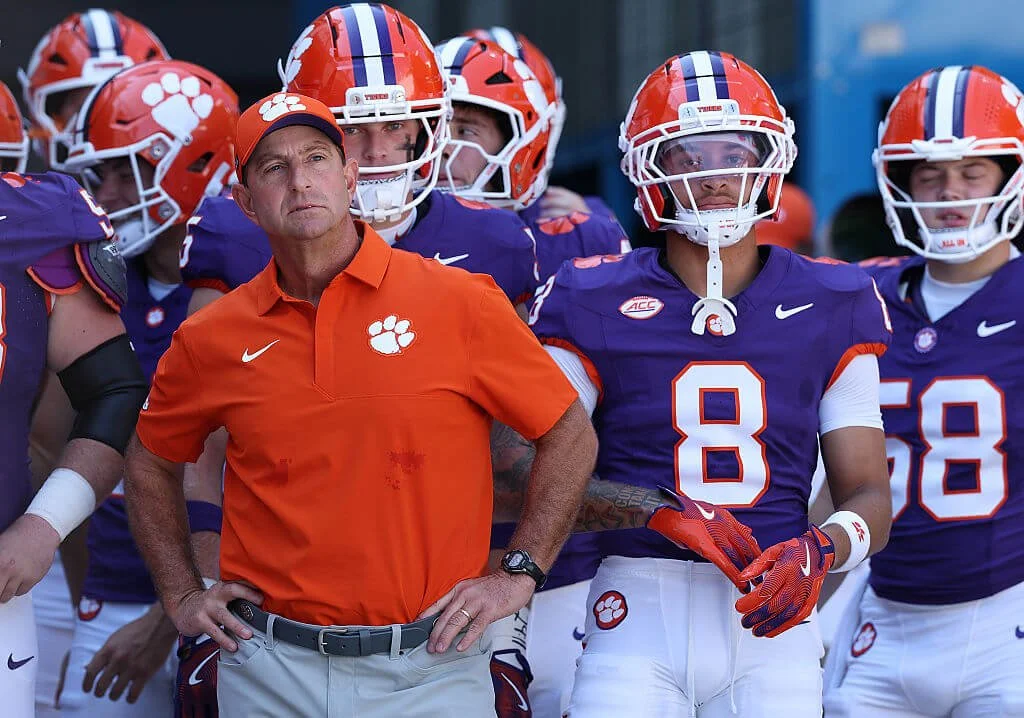
Head coach Dabo Swinney — a national championship winner and longtime leader of the Tigers — has historically emphasized high school recruiting and development. However, the recent botched season has pushed Clemson into a new posture: embracing the portal more actively while balancing its traditional identity.
Swinney has openly stated that Clemson will pursue portal targets to fill specific roster needs. “We got to see how it all shakes out,” he said regarding portal plans, noting that needs can shift quickly due to departures or DC or OL gaps.
Defensive coordinator Tom Allen, integral to Clemson’s rebuild, echoed that sentiment: after offseason losses, the portal will be key to replenishing depth and competitive talent on defense.
Clemson’s challenge is two-fold:
Replace key contributors lost to the portal and NFL drafts or graduation. This includes ensuring depth at defensive back, defensive line, and linebacker.
Target impact players via the portal to bridge experience gaps, particularly if young high school recruits are not yet ready to contribute at a high level.
According to roster projections and offseason analysis, Clemson will likely need to add multiple players via portal and recruiting to meet scholarship limits and compete in the ACC. Scouts project the Tigers to pursue 4–6 portal additions in key areas like quarterback competition, pass rush, and secondary depth.
The Bigger Picture: Reclaiming ACC Control
Clemson’s aura of ACC dominance — a hallmark of the Swinney era — faded in recent seasons. To reclaim that perch in 2026, the Tigers must stabilize the roster and boost talent where attrition struck hardest.
The portal gives Clemson a chance to:
Add experienced, college-proven talent to accelerate competitiveness.
Balance losses without depleting high school recruiting resources.
Maintain roster flexibility in case of late departures or NFL draft jumps.
It’s a strategic pivot that acknowledges the realities of modern college football: teams must blend traditional recruiting with portal savvy to remain contenders.
If Clemson can secure high-impact portal players who fill glaring holes — especially in the pass rush and defensive backfield — Swinney’s Tigers could be poised for an ACC title bid in 2026.
Conclusion
Clemson’s approach to the 2026 transfer portal window underscores a shifting paradigm. From a roster once built almost entirely through high school recruiting pipelines, the Tigers are embracing the portal as a necessary tool to replenish and elevate their roster. Early departures and incoming commitments highlight both the challenges and opportunities ahead.
As the portal window progresses, Swinney and his staff will need to balance roster needs, recruiting commitments and immediate impact players to restore Clemson’s status at the top of the ACC. The success of that strategy may very well determine whether 2026 becomes a return to prominence — or another year of rebuilding.