
Analysis: Miami's 33-20 Win Over Wake Forest Reveals a Team Still Finding Its Edge
WINSTON-SALEM, N.C. — On the scoreboard, Miami's 33-20 win over Wake Forest on Friday night looks like a comfortable ACC-opening statement for the fifth-ranked Hurricanes. Dig into how the game actually unfolded, though, and it tells a more complicated story — one about a team capable of dominance for three quarters, and then almost nothing at all.
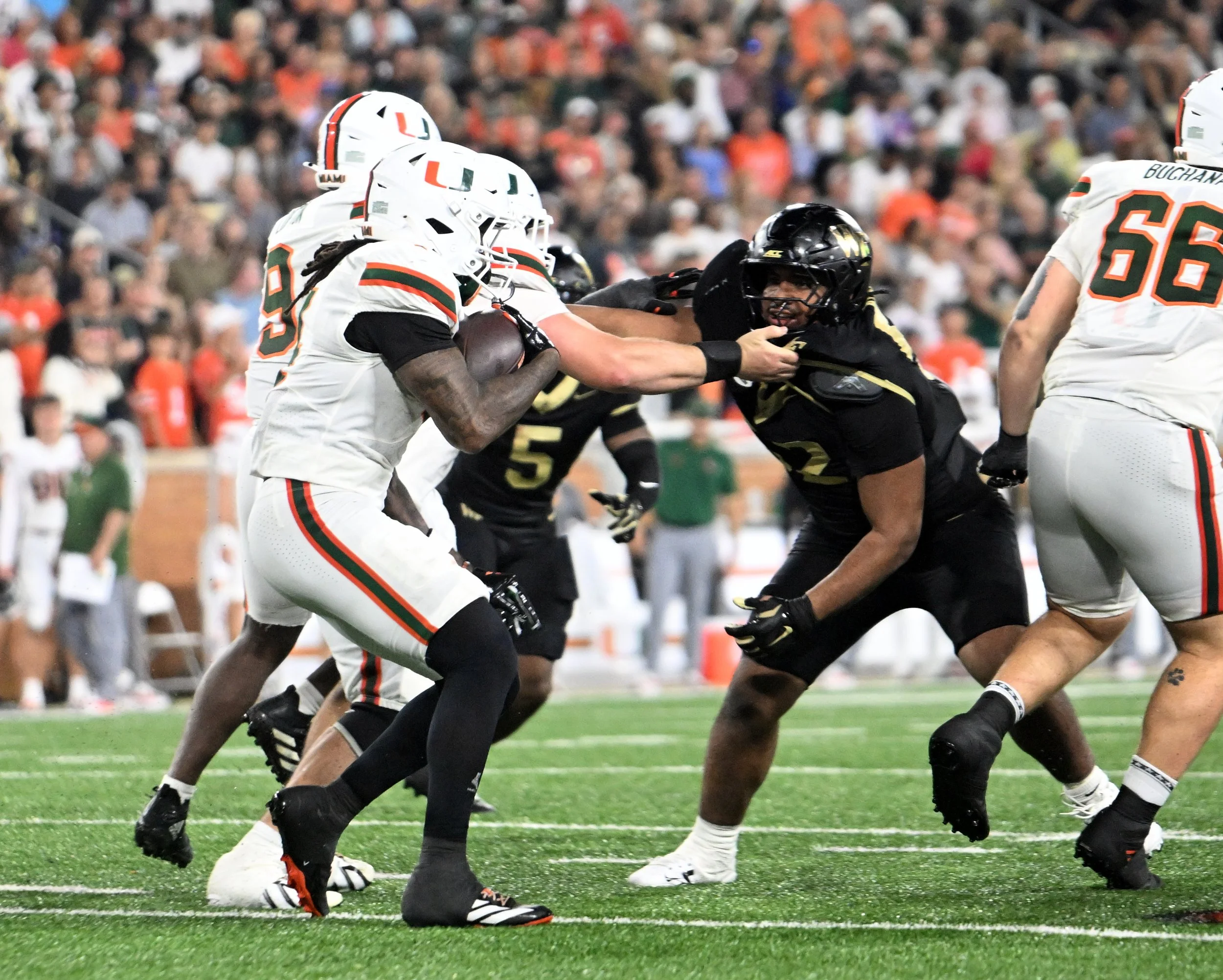
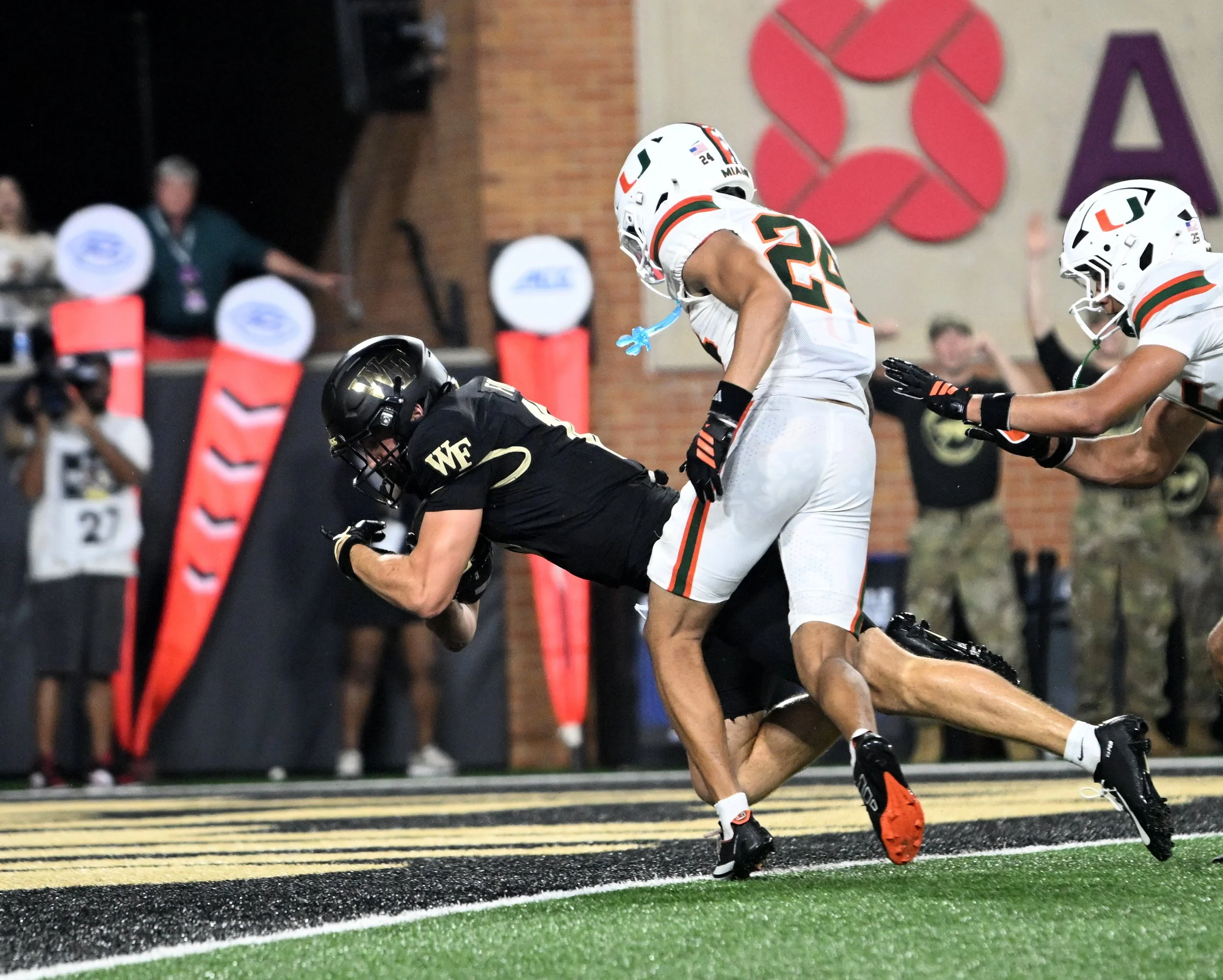
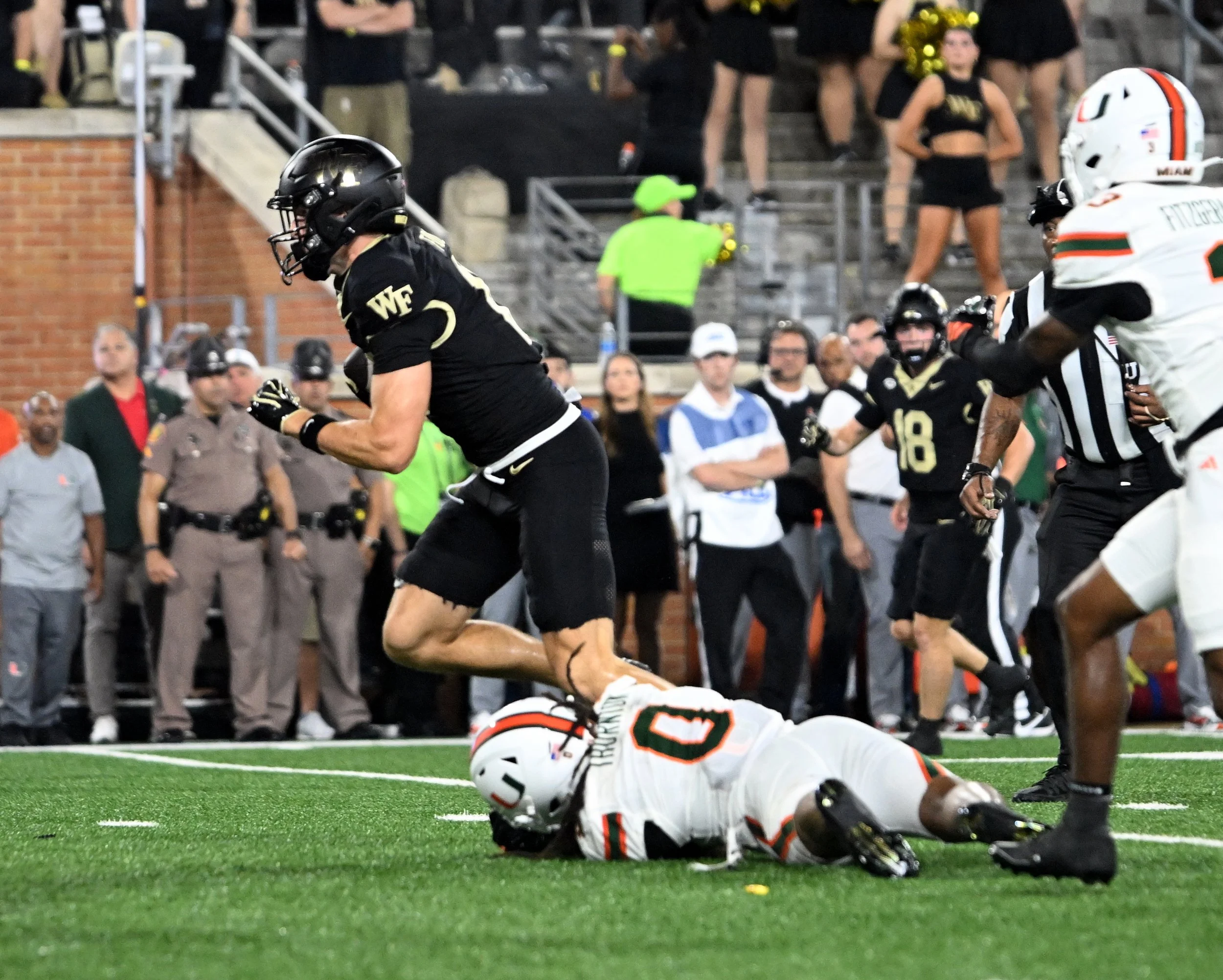
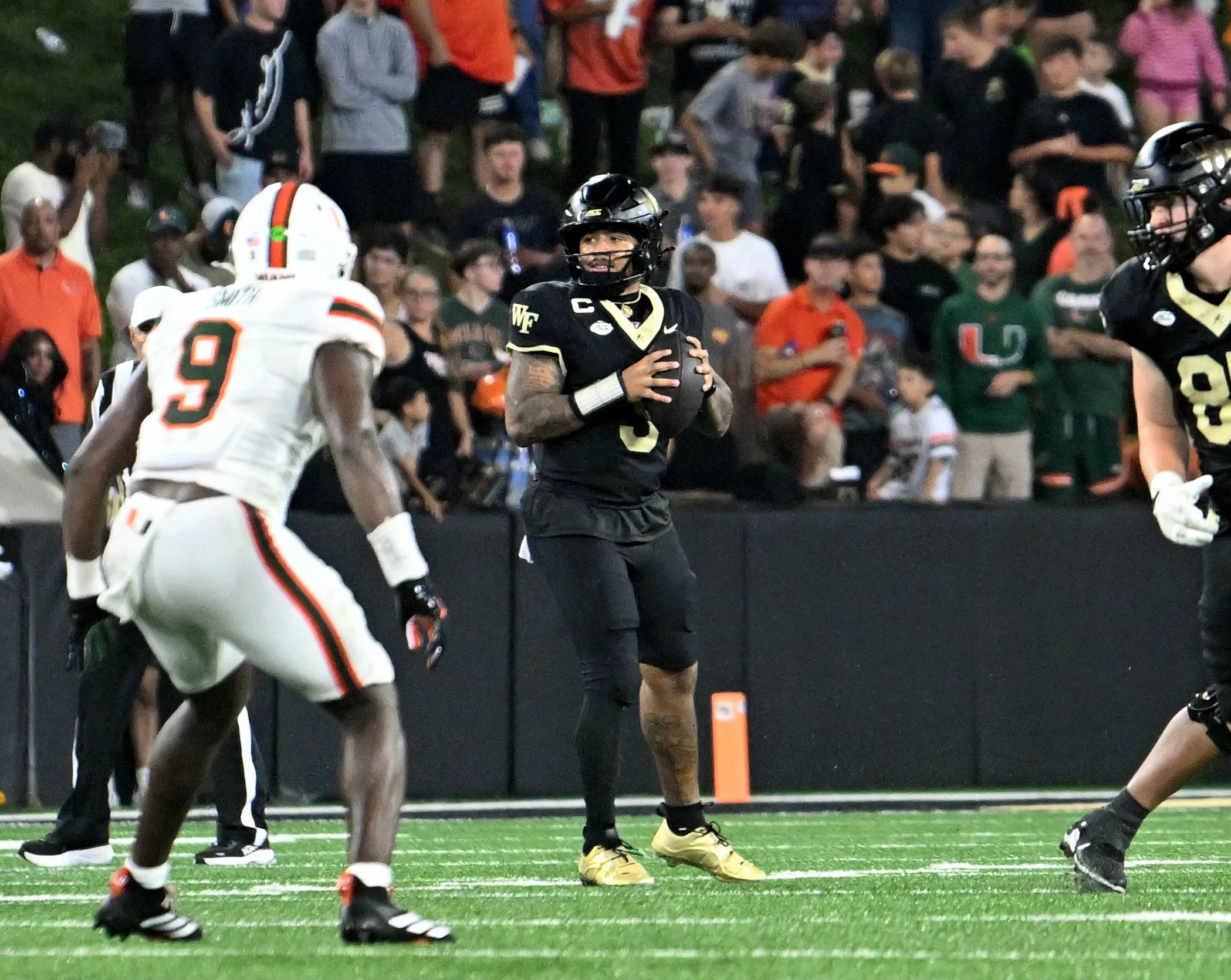
A Game of Two Halves — and Then Some
Miami's first 45 minutes were close to perfect. After trading an early touchdown with Wake Forest, the Hurricanes reeled off 24 unanswered points, capped by a 17-point second quarter in which Wake Forest managed just 18 total yards and zero first downs. Darian Mensah completed his first 20 pass attempts of the game. By the midpoint of the third quarter, Miami led 31-7, and the outcome looked settled.
Then the offense simply stopped. Miami's offense produced just 13 total yards in the fourth quarter — seven passing, six rushing — and punted three times without a single scoring drive. The Hurricanes did add two points in the period, but not through their offense: a Wake Forest holding penalty in the end zone resulted in a safety, meaning Miami's only fourth-quarter points came off a defensive/special-teams play rather than anything its offense generated. Against a Wake Forest team that had done almost nothing on offense for three quarters, an attack that couldn't manufacture a single scoring drive on its own in the fourth is still a near-total offensive shutdown.
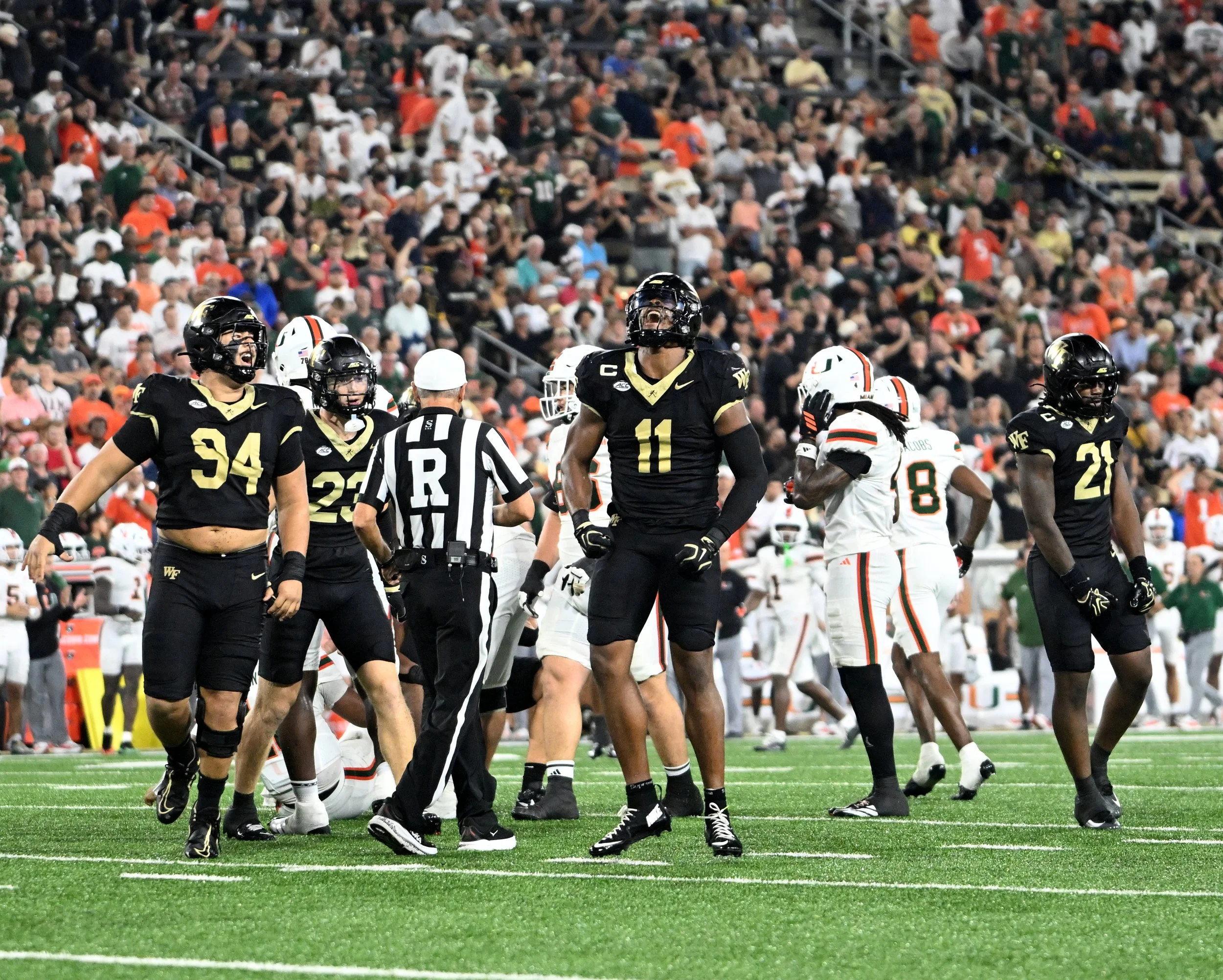
Wake Forest's response deserves real credit. Gio Lopez, who arrived from North Carolina this offseason, threw for 312 yards and three touchdowns, finding Kamrean Johnson, Jack Foley and Carlos Hernandez for scores as the Demon Deacons trimmed a 24-point deficit down to 11 with under 15 minutes to play. For a stretch, this looked like it might become one of the more memorable collapses of the young season.
What Actually Decided the Game
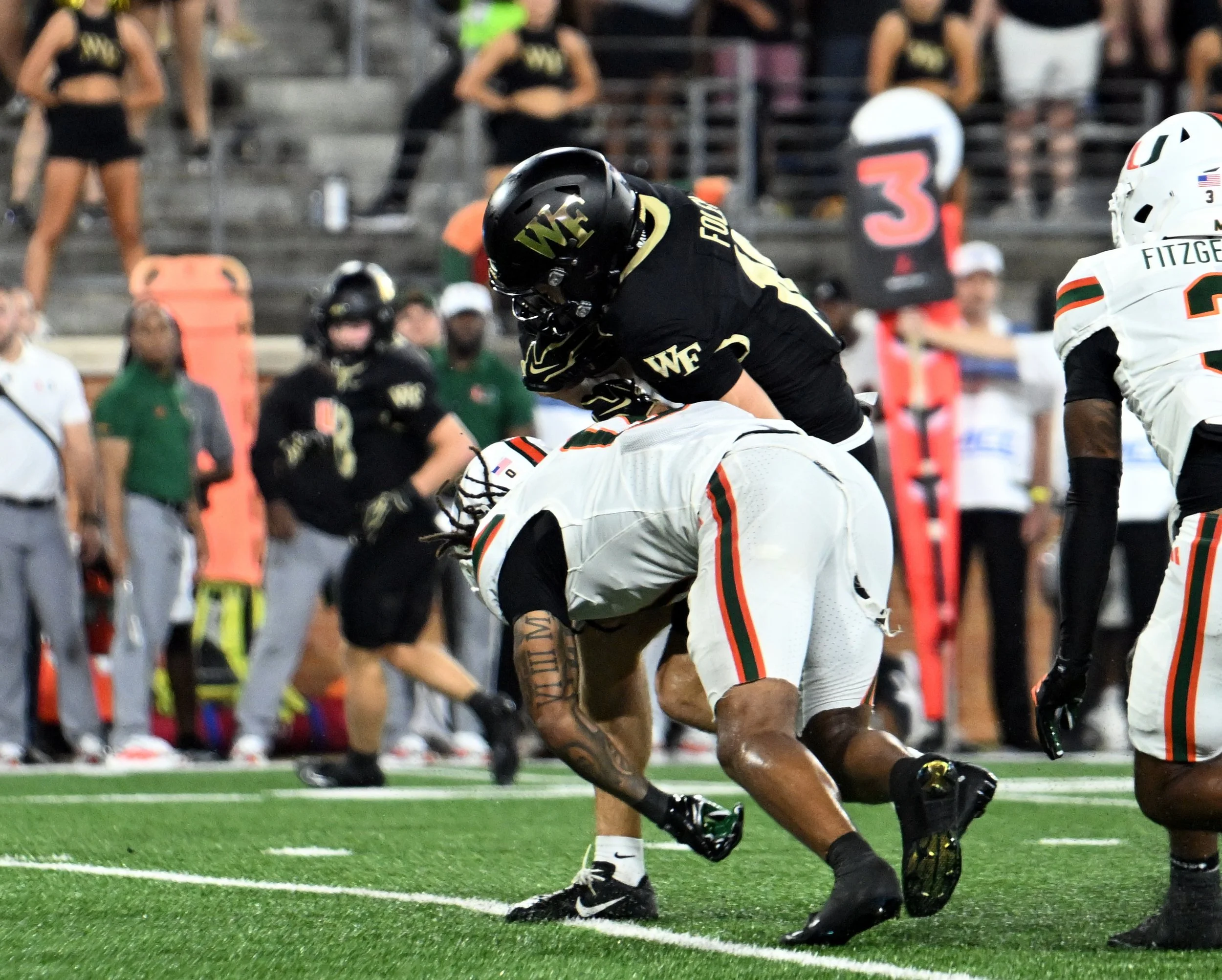
The numbers suggest this was closer than the final score, but the details tell a different story about why Miami still won comfortably enough. Wake Forest's 13 penalties for 122 yards — nearly double Miami's seven for 75 — repeatedly turned promising situations into setbacks. The most costly penalty came in the end zone: a holding call immediately after Wake Forest had cut the lead to 31-20, which produced a safety — handing Miami two points and pushing its advantage to 33-20 at almost the exact moment the Demon Deacons had generated real momentum. It's worth noting that safety accounts for all of Miami's fourth-quarter scoring; the Hurricanes' offense itself never found the end zone or so much as a field goal in the period. In effect, Wake Forest's own mistake did more scoring for Miami in the fourth quarter than Miami's offense did.
From there, Wake Forest's three closing possessions all ended empty — a turnover on downs at Miami's 14, another on downs near midfield, and an interception at the Miami 22 with 2:24 left. A defense that had shut Miami out in the fourth quarter never got the ball back in a position for its offense to finish the job.
The rushing numbers also tell a quieter but important part of the story. Wake Forest ran for just 22 yards on 16 carries — 1.4 yards per attempt — meaning virtually the entire offensive operation rested on Lopez's arm. Miami, by contrast, ran for 158 yards, with Mark Fletcher Jr. gaining 85 on 16 carries. A team that can lean on the run when the passing game stalls has a built-in margin for error that Wake Forest simply didn't have.
The Takeaway
This was a game Miami controlled for three quarters and then, by the numbers, lost outright in the fourth — and that split says as much about where this Hurricanes team stands as the final score does. A 24-consecutive-completion stretch from Mensah is the kind of efficiency that wins championships, but an offense that produces 13 total yards in a fourth quarter against an ACC opponent is not one that should feel entirely comfortable heading into October, when Miami visits Clemson and hosts Florida State in back-to-back marquee matchups. Wake Forest, for its part, should walk away encouraged rather than discouraged: a defense that held a top-five offense scoreless for a full quarter and a quarterback capable of 312 yards against that same defense are real building blocks, even in a loss. If Miami's fourth-quarter disappearing act shows up again against a team with a healthier red-zone offense and cleaner execution than Wake Forest managed Friday, the Hurricanes' unbeaten record could be in real jeopardy before the calendar turns to November.